The Villages Florida, Summer 2026

The Villages Florida Summer 2026 Edition – OurSeniors.net Magazine
Wishing the United States a Happy 250th Birthday, as everyone takes part in the celebrations while OurSeniors.net Magazine presents its the Villages Florida Summer 2026 edition. Make sure to check out https://ourseniors.net/editions.
Contents
Summer 2026 | Volume X | Issue 2







In the News
4. The Art of Jorge Vallina
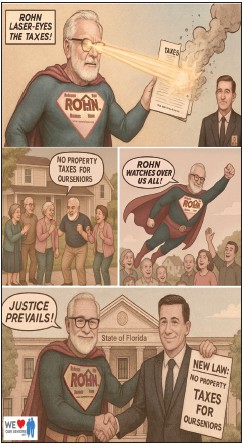
5. No More Property Taxes, Vote Yes on November 3rd
Community
19. Donate While You Dine and 50/50 Raffle Events
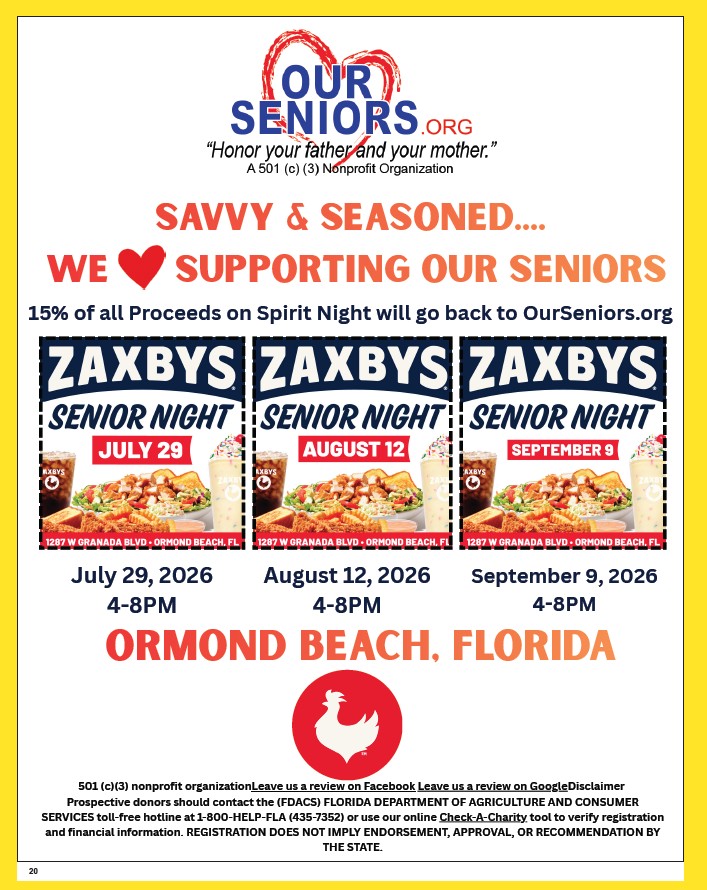
20. Zaxby’s Fundraiser
Entertainment
14. OurSeniors Comedy
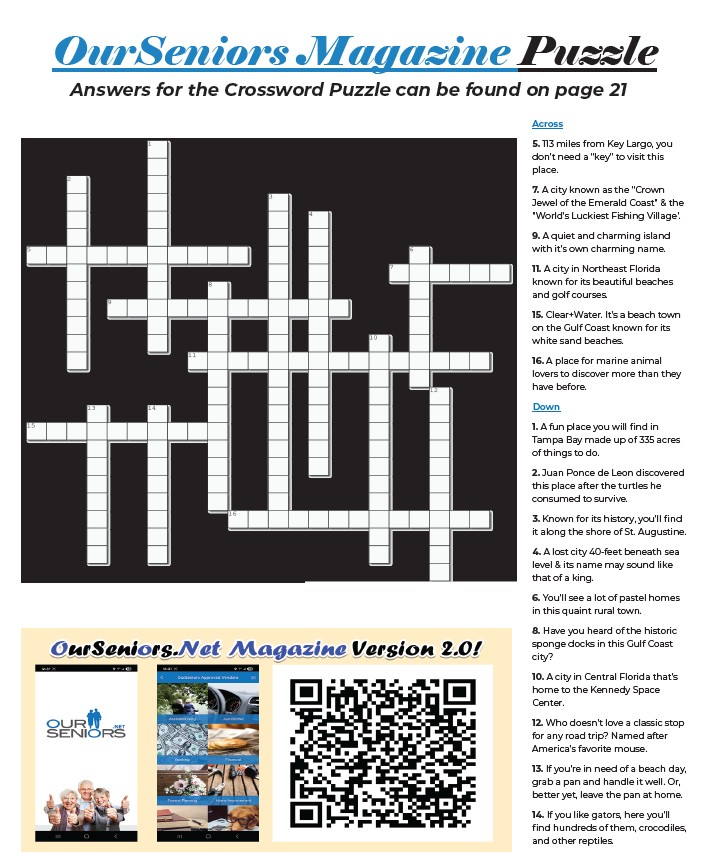
16. Crossword Puzzle for OurSeniors
Finance & Retirement
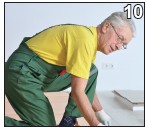
10. How Seniors Can Enjoy Flexible Part-Time Work While Embracing Retirement
Fraud & Security
17. The Long and Winding Road from Fingerprinting to DNA Mapping to Artificial Intelligence to Crime Solving
Health & Wellness
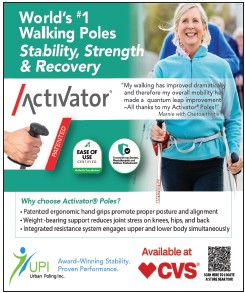
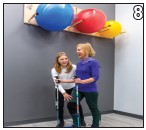
8. How Activator® Poles Are Revolutionizing Rehabilitation for Millions of People Worldwide
12. Self-Care Tips Every New Caregiver Needs to Stay Strong and Balanced
Inspirational
7. Introducing Jorge Vallina, Amazing Senior!
Don’t miss another edition by donating! Visit OurSeniors.org/donate
Disclaimer: The information published in this magazine and our website is intended for residents of the USA. The opinions, beliefs and viewpoints expressed by the various authors in this magazine and on this web site do not necessarily reflect the opinions, beliefs and viewpoints of OurSeniors.net Magazine or official policies of OurSeniors.net Magazine, OurSeniors Radio, OurSeniors Discounts, OurSeniors.org, Inc., OurSeniors.com and or its related entities. It may contain general information about medical conditions, public and private health service organizations and other third-party information including but not limited to testimonials. The information is not advice (legal, medical or otherwise) and should not be treated as such. Consult your licensed Professional such as Attorney and or Doctor etc. for further advice. No claim is made as to the accuracy, authenticity or completeness of any information and, is often provided in a generalized or summarized format for brevity. OurSeniors.net Magazine, LLC and or its subsidiaries, does not accept any liability for the information (nor for the use of any information) provided by this magazine and or website. The information presented by this magazine and website is provided on the basis that all viewers undertake responsibility for assessing the relevance and accuracy of the data related to their circumstances. Thank you for reading our magazine and visiting www.OurSeniors.net and please contact us if we can be of further assistance. All real estate advertised in OurSeniors.net is subject to the Federal Fair Housing Act. This federal law makes it illegal to advertise any preference, limitation or discrimination based on race, color, religion, sex, handicap, familial status, or national origin, or intention to make any such preferences, limitation, or discrimination. We will not knowingly accept any advertising for real estate which violates the law. All persons are hereby informed that all real estate advertised in OurSeniors.net is available on an equal opportunity basis. Information contained herein has been furnished by community owners, managers and agents. OurSeniors.net and or OurSeniors.online, OurSeniorsDiscounts.net and or OurSeniors.org, Inc. and OurSeniors.net Magazine, LLC do not make any representations as to opinions and facts. All terms and conditions of rentals are subject to change. OurSeniors.net reserves the right to refuse advertising space to anyone deemed unsuitable for placement in this publication. OurSeniors.net, OurSeniors.online, OurSeniorsDiscounts.net and or OurSeniors.org, Inc., and OurSeniors.net Magazine, LLC retains all rights reserved by copyright 2023 OurSeniors.net, and or OurSeniors.net Magazine, LLC. This publication or parts thereof may not be reproduced in any form without the written permission of the publisher. For further Disclaimer information please visit www.ourseniors.net and click Disclaimer on the footer of the website. Please note that websites and links are referenced in the magazine, and you may have complete access to our online version by visiting www.ourseniors.net/editions.

To Our Valued Readers, Subscribers, Vendors, and Donors of OurSeniors,
Happy 250th Anniversary to America
On July 4, 2026, our country will celebrate the 250th anniversary of the Declaration of Independence being signed. This significant moment gives us a chance to think about our history, pay tribute to the efforts of all Americans, and envision the future we hope to build for generations to come.
America250 is launching festivities for the United States’ 250th birthday in 2026. Some ideas are so impactful that they spread all over the globe. For 250 years, these concepts originated from here. There is no better occasion to reconnect with the symbols of this vast land – its rugged red cliffs, diverse cities, serene coastlines, welcoming small towns, world-famous landmarks, and the people who make each special place vibrant. Why does everyone from around the globe wish to visit us? Hmm, I wonder why… obviously! We are fortunate to be Citizens living in the best Nation in the World, indeed God Bless the USA!
Let’s keep this Anniversary as a day to Help Others
OurSeniors.Net Magazine has earned a reputation as the top magazine for seniors in Florida. It offers entertainment, news, and support to the senior community every three months. The “Amazing Senior” section showcases the achievements and life experiences of remarkable seniors from The Greatest Generation. These are genuine stories of success, challenges, and resilience that inspire us all. Read these stories here: https://ourseniors.net/editions/amazing-seniors-2016-2023/
All these services are available to seniors and their families without any charge. If you are reading this letter today, you too can contribute! To keep offering these Free Resources to this expanding community, your Donation is needed Now! OPERATION Support OurSeniors.org provides an easy way for you to help. All donations go towards ensuring that our publications and services remain free for the seniors who require them. As a 501 C (3) organization, your contributions are tax-deductible.
Please visit www.OurSeniors.org/donate to learn more. Seniors appreciate our magazine and other resources, but we need your support to keep serving them. Rising costs of producing and sharing OurSeniors.Net Magazine and other services have made it very challenging. Your contribution now will provide you with a quarterly magazine sent to your home, online access, Podcasts, Discounts, and Newsletters. Most importantly, it will allow you to support OurSeniors, the generation that truly made America wonderful.
One final thought
Let’s get rid of Property Taxes, so on November 3rd let’s Vote YES on the Property Tax Amendment! ROHN-Release Our Homes Now!
Sincerely,
OurSeniors.net Team


Please check out the front and back cover of OurSeniors.net Magazine for Summer 2026!
Indeed, the creator of the stunning and imaginative artwork is Jorge. Yes, Jorge Luis Vallina – this artist was born in Havana, Cuba, in 1959, and has been pursuing art professionally for over thirty years.
Now living in Miami, Florida, Jorge completed his Bachelor of Fine Arts in Graphic Design and Illustration, along with a Minor in Psychology, from the University of Miami. His education combined with his natural artistic curiosity has shaped his unique style of art—an expressive blend of technical skill, emotional richness, and cultural insights. He has shared his enthusiasm with many students by teaching at the University of Miami and Miami Dade Community College, where he offered courses in illustration, painting, and drawing.
During his artistic journey, Vallina has experimented with many different media and styles. His ability to switch between traditional and digital methods enables him to use airbrush, pencil, collage, acrylics, oils, and advanced digital techniques. His artwork showcases a mixed and diverse style that blends human culture, historical context, and creativity. Inspired by daily life, Vallina’s creations delve into identity shaped by both social and personal experiences with the environment. Each piece aims to capture and narrate a story about his intrigue with the complexities of human feelings and the beauty found in artistic expression.

Vallina’s works have been displayed in many galleries and museums, gaining recognition both in the U. S. and abroad. His art has appeared in various publications and at events that support charitable initiatives. His creative impact also reaches beyond traditional art—it includes commercial projects featured on radio shows, television, and theater, allowing him to connect with a wider audience.
In addition to his accomplishments as an artist, Jorge is dedicated to teaching and mentoring. He sees art as not just a way to express oneself but a strong tool for building connections and inspiring others. Besides teaching at the university level, he often leads workshops at both private and public organizations, guiding budding artists of all ages and backgrounds. His open-minded teaching style encourages learners to explore and express themselves freely. Jorge expressed, “One day, if you are lucky, you’ll age too. The kindness you show to older adults today. . . helps shape the world you’ll inhabit tomorrow.”
Vallina’s creations can be found in private and company collections throughout the United States and internationally, showcasing his broad appeal and artistic range. His clientele includes educational leaders, business experts, and individuals from the sports and entertainment sectors. Through his artwork, drawings, and digital pieces, Jorge consistently portrays the vibrant connections between culture, history, and creativity. For him, art is more than just making; it is about sharing, educating, and celebrating human experiences through imagination and storytelling. Julian G. Cantillo, CEO and Founder of OurSeniors.net Magazine and OurSeniors.org, also commented, “We feel truly privileged and grateful to collaborate with such a generous artist like Jorge Vallina, who constantly finds ways to give back to humanity with his God-given gift. Thank you very much, Jorge, and keep up the wonderful work.”

Indeed, Florida has been a prominent topic in the news, particularly on social media platforms. You might have noticed it being talked about a lot this week. Yes, at last, the legislators in Florida have decided to include an amendment on the ballot for November 3rd, allowing all registered voters in Florida to cast their votes for starting the cleanup on Aisle 4! There has been a significant spill for a long time, and it is time for a thorough cleanup! This only pertains to the Homestead Exemption. More information can be found below.
To be approved and incorporated into the Florida Constitution, it needs 60% of voters to agree.
Florida lawmakers passed a sweeping property tax constitutional amendment proposal (HJR 1-F) during a special legislative session that concluded on June 2, 2026. Backed by Governor Ron DeSantis, the “Save Our Homes from Excessive Property Taxes” amendment has officially been sent to the November 3, 2026, general election ballot. [1, 2, 3]
To become part of the state constitution, the amendment requires a 60% supermajority approval from voters. If approved, implementation will begin on January 1, 2027. [1, 2, 3]
The core of the amendment is a massive increase in the homestead exemption for a homeowner’s primary residence: [1, 2]
- 2027 Tax Year: The homestead exemption for non-school property taxes will jump from the current $50,000 to $150,000.
- 2028 Tax Year: The exemption will increase to $250,000.
- 2029 and Beyond: The $250,000 baseline will be indexed to inflation annually.
- Pathway to Elimination: The amendment directs the Legislature to eventually establish a schedule to fully eliminate homestead property taxes. [1, 2, 3, 4]
- The “School Tax” Carveout
To protect education funding, the Florida Legislature modified the governor’s original plan to ensure that the new exemptions do not apply to school district levies. Homeowners will continue paying the school-designated portion of their tax bill (which makes up roughly 40% of an average Florida property tax bill). [1]
- Caps on Commercial & Rental Properties [1]
The amendment also offers tax relief for small businesses and landlords. It cuts the current 10% cap on annual assessment increases for non-homestead properties (vacation homes, rental units, and commercial buildings) down to a 5% cap starting next year. [1, 2]


To ensure the relief primarily targets long-term Floridians, anyone who establishes Florida residency after January 1, 2027, must maintain continuous residency for five years before becoming eligible for the expanded super exemption. Until then, they will only receive the standard baseline exemptions. [1, 2, 3]
- Local Spending Restricted to “Core Services” [1]
Because local governments stand to lose billions in tax revenue, the amendment mandates that counties and cities may only spend remaining ad valorem tax revenues on strict “core public services,” which include: [1, 2, 3]
- Public safety (police, fire, and emergency medical services).
- Public schools and education.
- Infrastructure (roads, bridges, and stormwater systems).
- Natural resources (flood control).
- Existing local bonds and debt service payments.
- Government employee retirement benefits.
- Standard administrative costs for constitutional county offices (e.g., supervisor of elections, property appraiser). [1, 2, 3, 4, 5]

Bottom line
Finally keep in mind that by the time you read this article the Florida Department of Government Efficiency has been auditing cities and counties and so far they have found this https://www.flgov.com/eog/news/press/2025/governor-ron-desantis-and-cfo-blaise-ingoglia-highlight-excessive-local-government Therefore, it is important to note that there is room for improvement and smooth transition takes place to Make Florida Affordable Again.
We will leave you with this thought and its real, Abraham Hamilton, III pointed out in one of his podcasts that in the Communist Manifesto, written by Karl Marx and Frederick Engels and published in February 1848, it mentions on page 56 that: However, in most developed nations, the following ideas will mostly apply. 1. Ending ownership of land and using the income from land for public needs. Also, that you will pay rent for the rest of your life to the Government! Doesn’t this seem like the path we are currently on? This is the reason why there will be strong push from politicians, towns, counties, and local governments to keep property taxes. Have you ever thought about why these political groups are fighting against it and where all that money goes? Vote YES, on the Property Tax Amendment on November 3rd, please don’t give in to all of the fear mongering out there!
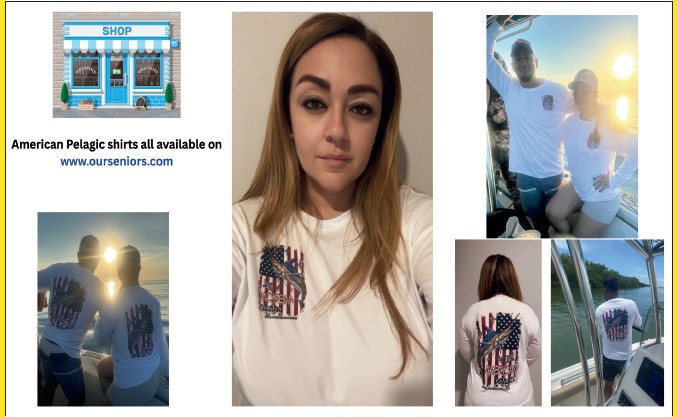
This is why you can count on OurSeniors.org a 501 c 3 not for profit, non-government organization, continue to be looking out and advocating for seniors. Check out OurSeniors.com our latest Online Store. Help support the cause!


For Jorge Luis, art is not only a passion, it’s been ingrained in him since he was young. It all began with weekly shing trips with his grandfather, where the breeze of the sea, the pristine beaches and brilliant hues of marine life entranced him. Growing up in Cuba meant being constantly surrounded by the aroma of Cafecito, sounds of dominoes being shuffled, and vibrant textures everywhere. This tropical island was the catalyst for what paintings Jorge would whip up in the future. Color was on display in everyday life. Then, with the coming of the Cuban revolution it all transformed into a very bleak picture.
As he and his family escaped from the totalitarian communist regime in Cuba and hopped to Spain and then to the United States the land of LIFE, LIBERTY, AND THE PURSUIT OF HAPPINESS, another challenge would face his family. A new struggle for Jorge’s family, since the Cuban revolutionary government kept everything, the family owned, Jorge’s family began a new life with the help of some US government programs, and relatives that had already established themselves in Miami. With a commitment to hard work Jorge’s father and mother quickly adjusted to the new opportunity that had been given to them. Then, after a while, Jorge began to find beauty in everyday things again. Now, in his new hometown of Miami, where art deco and the ocean followed him everywhere his creativity owed without boundaries.
From paintbrush to digital programs, there is no medium Jorge has not traversed. He decided to pursue Graphic Design at the University of Miami, where he graduated with honors. For Jorge, art is not just about creating; it’s about passing on his knowledge and love for the craft. He has taught classes in illustration, painting, and drawing at the University of Miami, and Miami Dade Community College, inspiring the next generation of artists. In addition to his academic teaching, he frequently conducts workshops for private and public institutions, offering his expertise and mentorship to those eager to learn.
Jorge Vallina’s Composite / Eclectic artwork has been showcased in renowned galleries and museums, including the Lowe Art Museum at The University of Miami, The Broward Art Guild Gallery, The NSU Museum of Art Ft. Lauderdale, The Norton Art Museum, The Bacardi Art Gallery, and currently the Saladrigas Art Gallery at his High School Alma Mater Belen Jesuit Prep. His pieces have also been featured and displayed at different types of events mostly for charity such as but not limited to the Miami Billfish Tournament, Kiwanis of Miami, Miami Outboard Club, Ocean Reef Club where his nautical and shing-inspired works resonate with the event’s coastal energy.
His accolades don’t end with gallery shows or events, Jorge’s work has been highlighted in numerous publications both national, and international. For example, from North Light Books to AIGA) American Institute of Graphic Arts) ArtEstate Magazine, marking him as a key figure in the art and design communities. His art has been featured in radio programs, regular and cable TV productions, Music Festivals, Magazines, Sports, always expanding his reach to an ever-growing new audience. Jorge’s work can be found in private and corporate collections across the United States and internationally. His pieces have found a home with a wide range of prominent clients, from academia, business leaders, sports and entertainment celebrities. His art continues to resonate with collectors and organizations that appreciate both its technical skill and deep emotional depth.
As a recognized, published, award-winning artist, Jorge continues to use his skills, not only for his enjoyment, but for that for others. At 67, happily retired, besides that of his wife and daughter, Jorge has fully dedicated himself to creating art. He creates both commercial and private commissions and produces exclusive pieces that are auctioned for the benefit of charitable causes such as Children with Disabilities, Veterans and Gold Star Families, First Responders, and Marine Life Environmental causes. Whether through his dynamic paintings, commercial designs, thoughtful commissions, or music projects, Jorge’s legacy is one of relentless creativity, a testament to the transformative power of art. Julian G. Cantillo, Founder and Executive Director said, “Jorge is truly a young Amazing Senior, with tremendous talent and certainly sharing God’s given talent with the world. Thank you Jorge for your kindness and generosity!” You can find more information about Jorge on his Jorgevallinaart Instagram page and or email valiandesign@aol.com

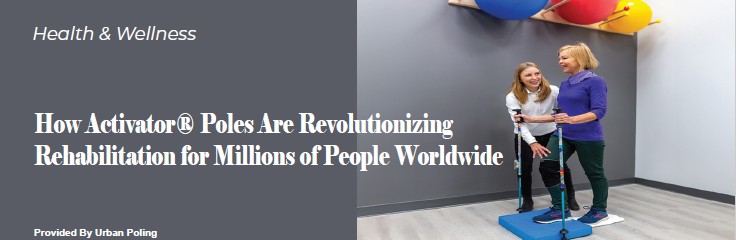
Reshaping Rehab by Helping People Regain Strength, Balance, and Confidence
Originally developed by an occupational therapist for clinical use, Activator® poles are now used worldwide to improve mobility, reduce fall risk, and support people with Parkinson’s disease, arthritis, stroke, chronic pain as well as many other conditions impacting balance. Unlike traditional walking poles, Activator® poles are designed to support additional stability, joint protection, and provide evidence-based movement support for safer, more effective walking. They help people regain mobility, independence, and confidence—the core of rehabilitation.
Real-Life Benefits
The impact of Activator® poles is best seen in the stories of the people who use them every day. Here is how Kristin J. describes the difference they made in her life:
“I am a 79-year-old enthusiastic owner and user of your Activator® poles. I became familiar with them at the Functional Fitness program that I have been participating in since last December to improve my mobility. I bought my own Activator® poles shortly thereafter. At the end of January 2026, I went to Jamaica to attend my granddaughter’s wedding. In the reviews of the resort one comment suggested that you should be in good shape to get from point A to point B because everything at the resort was a long way from your room!!! That’s when I decided to bring my poles with me on my trip – my cane just would not have done the job and would have left me uncomfortably twisted and perhaps staying in my room most of the time.”
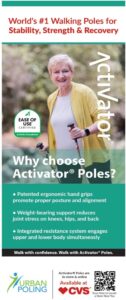
Why Activator® Poles Stand Out – Built for Better Stability
Unlike traditional walking poles or canes, Activator® poles are specifically designed to provide added support and stability.
Wide Base of Support: Bell-shaped tips create more ground contact for better stability.
Easy Setup: Discover why the poles are Ease of Use approved by the Arthritis Foundation here.
Comfort When It Counts: Ergonomic handles help reduce wrist strain and may take pressure off the back and lower joints while you walk.
Reliable Support: A secure button-locking system helps prevent collapse, while the weight-bearing design adds stability before and after surgery, for neurological conditions, and during recovery after falls.
Turn Every Walk into Therapy
Activator® poles turn walking into a low-impact therapeutic exercise. By engaging the upper body and activating the core, they may help improve:
Posture: Encourages you to stand taller and helps reduce forward lean.
Core Activation: Pressing down on the CoreGrip™ handles engages the abdominal muscles with every step.
Balanced, Coordinated Movement: Greater stability may help reduce shuffling and support a smoother walking pattern.
Joint Relief: Helps reduce pressure on painful hips, knees, and ankles.

Support for Rehab and Recovery
Health care providers use Activator® poles across a wide range of treatment plans, including:
Parkinson’s Disease: Research shows a clear connection between regular physical activity and its role in managing, and potentially slowing, the progression of Parkinson’s symptoms. Activator® poles may be especially helpful by encouraging rhythmic arm swing, which may help reduce freezing.
Multiple Sclerosis: Activator® poles can improve balance and reduce fatigue by providing greater stability than standard walking aids. They may also reduce fear of falling, encourage longer walks, improve gait and posture, strengthen the core, and support overall well-being.
Hip and Knee Replacement Rehab: Activator® poles may help build walking strength and confidence both before and after hip or knee surgery.
Arthritis and Chronic Pain: Urban Poling supports those living with arthritis through Ease of Use Activator® poles, designed to make setup and walking easier and more comfortable.
Balance and Fall Prevention: Many clinics offer fall-prevention programs that incorporate Activator® poles. To learn more, register here for UPI’s free webinar, “Activator® Poles – A Tool for Fall Prevention.”
Activator® poles support every step of the rehabilitation journey, helping people affected by chronic conditions walk taller, move more confidently, and stay active every day.
Get Your Activator® Poles
Ready to try them for yourself? Activator® poles are now available online through CVS and at select stores. To check local availability, click here to find the CVS nearest you.
Move with More Confidence
Urban Poling’s Activator® poles are more than mobility aids—they support independence, fitness, and confidence. Backed by research and developed by an occupational therapist and gerontologist, Activator® poles are helping transform rehabilitation so people can get back to doing the things they love. If you want a mobility aid that supports your body and builds confidence, it’s time to discover the Activator® difference.
To Learn More
Contact: Urban Poling Inc.
https://urbanpoling.com
Email: info@urbanpoling.com
Phone: 1-877-499-7999

For seniors balancing work and retirement, the appeal of part-time employment for retirees is real: a little extra income, a stronger sense of purpose, and regular connection without giving up hard-won freedom. The tension is just as real, older adults often want the benefits of working during retirement while protecting energy, health, and the retirement lifestyle choices that make this season satisfying. Some opportunities fit beautifully, while others quietly crowd out rest, family time, and the flexibility retirees value most. With today’s older adult workforce opportunities, the goal is simple: work that supports retirement life.
Understanding Why Retirees Work (and What to Watch)
Retirement work usually comes down to three drivers: shoring up income, enjoying more social contact, and keeping your mind and body engaged. The key is separating “want to work” from “have to work,” since the involuntary part-time employment rate shows part-time hours are not always a free choice.
This matters because your “why” sets your boundaries. If you are working for connection, you might choose shorter shifts with friendly coworkers. If you are working for money, you may accept less flexibility, but still protect health by planning for fatigue, appointments, and recovery days.
Picture a retiree who takes two morning shifts at a local shop for conversation and structure, then feels wiped out by afternoon. That is a useful signal to adjust hours, pick a lighter role, or swap to seasonal work. With priorities clear, home-based business options can offer flexible income without rigid schedules.
Start a Low-Stress Home Business in 4 Simple Moves
If you’ve weighed the “why” behind working in retirement and the trade-offs, a small home business can be a gentle next step that keeps the benefits while dialing down the pressure. For many seniors, running a simple business from home is appealing because it can provide flexible income, let you lean into a longtime passion, and give you more control over when, and how much, you work.
Forming an LLC can make sense as you get organized, because it helps separate your personal life from your business and can add a layer of professionalism. If you want a streamlined path, many retirees use free LLC formation through a formation service that charges $0 in service fees, while still paying the required state filing fees (which vary by state).
Compare Senior-Friendly Jobs (With Best-Fit Clues)
A good retirement-friendly job should fit your energy, your schedule, and your “why” (extra cushion, social time, or staying sharp). Use the ideas below as a menu, then shortlist 2–3 options to test the way you would a low-stress home business: small trial, clear pricing, and simple boundaries.
Start with consulting roles for retirees (your “expertise on a schedule”): List 3 problems you’ve solved at work or in the community, then offer them as a simple package such as “two 60-minute calls plus a written plan.” This works well because you control your hours and can say yes only to projects that feel worth it. Best-fit clues: you like advising, you can explain things clearly, and you want higher pay for fewer hours.
Try pet care services for flexible, feel-good income: Consider dog walking, pet sitting, or “vacation check-ins” for neighbors, then set a service area and a maximum pet size you’re comfortable handling. Start with a two-week pilot with 1–2 households so you can confirm the walking distance and time demands. Best-fit clues: you enjoy routine movement, you prefer short shifts, and you don’t want screen-heavy work.
Use tutoring and teaching opportunities to turn patience into pay: Offer homework help, reading practice, conversation practice, or basic computer coaching, often from home or at a library. If you’re not ready to build your own client list, substitute teaching or classroom support can be a structured option. Best-fit clues: you like mentoring, you don’t mind repeating instructions, and you want work that feels meaningful.
Explore virtual assistant positions for home-based, predictable tasks: Virtual assistant work often involves inbox sorting, appointment scheduling, travel planning, data entry, or customer follow-up. The appeal is that many businesses hire VAs because they can reduce operational expenses compared with adding full-time staff, which can create steady part-time demand. Best-fit clues: you’re comfortable with email and calendars, you like checklists, and you want to avoid commuting.
Choose retail work when you want easy entry and social time: Retail can be a straightforward “start this week” option, especially if you pick roles that match your stamina (greeter, cashier, fitting room, stock support) and request shorter shifts. High churn can mean openings are common, with retail employee turnover pushing many stores to hire frequently. Best-fit clues: you enjoy people, you can stand for parts of a shift, and you want a clear start-and-stop schedule.
Consider childcare work for consistent hours and community connection: Options range from school pick-up help to part-time nannying to assisting in a child-care setting. Protect your energy by setting age ranges you’re comfortable with, limiting heavy lifting, and agreeing on a firm end time before you start. Best-fit clues: you’re patient, you like playful structure, and you want work that feels relational.
Round out your list with three “easy-to-test” extras: (a) Driver/errand helper for seniors, set a radius and only take daytime requests. (b) Event support like ticketing or ushering, great if you want seasonal bursts instead of weekly work. (c) Seasonal tax prep or bookkeeping support, ideal if you’re detail-oriented and willing to do a short training.
Once you’ve circled your top options, write down your non-negotiables, maximum hours per week, acceptable physical demands, and a minimum pay rate, so your job choice supports your health, your time, and your overall retirement plan.
Retirement Work Questions Seniors Ask Most
Q: Can part-time income reduce my Social Security benefits?
A: It can be if you are under full retirement age and earn above the yearly limit, since some benefits may be withheld. The good news is that once you turn the FRA, there are no benefits withheld due to earnings. If you are unsure where you fall, call Social Security or check your online account before accepting extra hours.

Q: What tax basics should I keep in mind for a small side gig?
A: Set aside money for taxes as you go, because freelance or “self-employed” work often has no withholding. Track mileage, supplies, and simple expenses in a notebook or spreadsheet, and keep receipts. A tax preparer can tell you whether quarterly estimated payments make sense.
Q: How do I protect work-life balance while still earning?
A: Think of work-life balance as having enough time off and flexibility for life’s surprises, not just fewer hours. Choose roles with clear start and stop times and set a weekly maximum before you begin. Put personal priorities on your calendar first, then fit work around them.
Q: Should I worry about legal paperwork when I take a part-time job?
A: Yes, but it can be simple: ask for the pay rate in writing, the schedule expectations, and whether you are an employee or an independent contractor. Read any contract for cancellation rules, non-compete language, and reimbursement details. If something feels unclear, request a revised written summary before you start.
Q: What if I try working and realize I do not actually need it?
A: That is a success, not a failure. Many people explore work for structure or interest, and seniors considering getting a job often cite getting bored as a reason to return. Pick a short trial window, then decide whether to continue, reduce hours, or walk away.
Build Confidence in Retirement With One Small Work Commitment
Wanting extra income without giving up hard-earned freedom is a real balancing act in retirement. A flexible mindset, planning retirement work goals around your energy, interests, and boundaries, keeps part-time employment in its proper place: supportive, not consuming. Done this way, the positive effects of part-time employment can show up as steadier cash flow, more structure, and personal fulfillment through work, while still protecting time for family, rest, and hobbies. Choose work that fits your life, not a life that fits your work. This week, reach out for one shift, one client, or one application and then step back to see how it feels. That small experiment can strengthen confidence, connection, and long-term wellbeing while balancing leisure and income. If you are enjoying these informative articles, please take the time to download OurSeniors Mobile App and also feel free to share with your friends on Social Media, and yes you can also Donate here: https://www.ourseniors.org/donate/ or Volunteer here: https://ourseniors.net/volunteer-team/ thank you all.


For seniors and retired adults stepping into caregiving for a spouse, sibling, or parent, the days can start to feel like a string of small emergencies with no real off-switch. Between caregiving challenges, tight retirement budgets, and everyday worries like property taxes and errands that suddenly take twice as long, the role can quietly take over a life. When caregivers’ emotional well-being gets pushed aside, caregiver burnout doesn’t always arrive with a warning, it shows up as exhaustion, irritability, and a sense of disappearing. Self-care matters because the caregiver’s steadiness becomes part of the care.
What Self-Care Really Means for Caregivers
Self-care is not a spa day you cannot afford or schedule. The ability of individuals to maintain health and cope with illness can include tiny choices that protect your physical strength and your emotional steadiness. Think of it as basic upkeep that helps you keep showing up.
It matters because your body and mood are part of the caregiving system. When you sleep a little better, eat something real, or take five minutes to reset, tough moments hit less like a wave. That steadiness also helps when you are juggling retirement limits, buying supportive clothing that makes daily tasks easier, and staying on top of property tax paperwork.
Picture a day with a doctor call, a pharmacy run, and a tax bill in the mail. You pause for water, a protein snack, and a short check-in with yourself for peace of mind. Nothing big changes, but you feel less reactive and more capable. With that foundation, it helps to try a quick menu of stress-reduction techniques that calm your body.
Try Stress-Relief Paths Beyond Deep Breaths
Once you understand that self-care is anything that steadies your nervous system, it helps to have a few “try-this-next” tools. Here are four safe, alternative options to explore: (1) mindfulness practices like a short guided meditation to quiet racing thoughts, (2) relaxation methods such as progressive muscle relaxation to release tension, (3) kava, a supplement some people use to support stress resilience (check with your clinician first), and (4) THCa, often discussed in the context of THCa diamond concentrates, which may feel calming for some, so start low and go slow if it’s legal where you live.

Tiny Weekly Habits That Keep Caregivers Steady
When caregiving and retirement worries collide, consistency beats intensity. These habits help you stay strong, keep your advocacy and paperwork clear-headed, and still show up in the comfortable apparel that makes daily tasks easier.
Two-Minute Morning Body Scan
- What it is: Notice three body sensations and name one feeling, without fixing it.
- How often: Daily
- Why it helps: It reduces reactivity before calls, errands, or tough family conversations.
Protein-Plus Snack Pairing
- What it is: Pair a protein with fiber like yogurt plus berries or nuts plus fruit.
- How often: Daily
- Why it helps: Steadier energy helps you stay patient and avoid stress eating.
Ten-Minute Movement Loop
- What it is: Walk, stretch, or do chair squats while coffee brews.
- How often: Daily
- Why it helps: Movement releases tension and supports stamina for hands-on care.
Lights-Out Protection Plan
- What it is: Guard a bedtime window for sufficient rest.
- How often: Nightly
- Why it helps: Sleep improves coping when days get unpredictable.
Help Request Friday
- What it is: Ask one person to cover an errand or hire professional support for a task.
- How often: Weekly
- Why it helps: Sharing the load prevents burnout and resentment.
Caregiver Self-Care Questions Seniors Ask Most
Q: How do I fit self-care in when I am also handling retirement paperwork and property tax issues?
A: Use a decision rule: if it takes under 10 minutes, do it now; if not, schedule it. Pair one caregiver task with one personal task, like making a call right after you eat. Keep a short “advocacy list” so you stop carrying it all in your head.
Q: What should I do when I feel guilty for resting or buying supportive, comfortable clothing?
A: Guilt is common and it can intensify burden, which research links to caregiver guilt and an effect size of 62.56%. Try this reframe rest is part of care because it protects your patience and judgment. Start small by setting a timer for 10 minutes and stop when it ends.
Q: How can I manage time when family needs pop up without warning?
A: Choose three non-negotiables each day: meds, meals, and one recovery action for you. Everything else becomes “nice if it happens.” If a new request does not protect safety or health, it waits.
Q: When should I ask for help, even if I feel I should handle it myself?
A: Ask as soon as you notice resentment, brain fog, or skipped meals. A report found no formal plan is common, so creating one simple backup list is a strength, not a failure.
Q: Where can I find support resources that do not feel overwhelming?
A: Start with one phone call: your local Area Agency on Aging can point to respite, benefits counseling, and caregiver groups. Bring one question and one document, then stop after you get to the next step.
One Small Self-Care Routine That Strengthens Your Caregiving Heart
Caregiving can quietly pull attention away from sleep, meals, and even a few calm breaths, until balance feels out of reach. The steadier path is the mindset practiced here: simple decision rules, realistic boundaries, and a focus on caregiver empowerment instead of guilt. Over time, that steadiness supports long-term well-being and leads to more positive caregiving outcomes, because care feels less frantic and more sustainable. When the caregiver is cared for, care gets better. Choose one repeatable self-care action tonight and write it where it will be seen tomorrow. This is how caregiver and loved one’s wellness grows, one steady, kind choice at a time. If you are enjoying this article along with others, please don’t forget to download OurSeniors Mobile App you can download here: https://www.ourseniors.org/ourseniors-mobile-app/ also share with your friends on Social Media.


Effective crime solving is about addition not subtraction. As former Supreme Court Justice Frankfurter was quoted as saying “when wisdom cometh, accept it”. With the birth of forensics, thousands of cold cases formally unsolvable are now being solved. Crimes of all types and varieties can now be solved by blood spatter patterns, hair follicle samples, tire tread marks, and seamen /blood /saliva specimens. Wow crime fighting is on the move ever-forward. Fingerprints were first used in the United Sates in 1902. The New York City Police Department was one of first police agencies to adopt this investigative tool. Soon thereafter, the use of fingerprints began spreading throughout the U.S. In 1924, the FBI began cataloging fingerprints and by 1971, they had collected and stored over 200 million fingerprints (openfox.com/history-of-fingerprinting/). In 1986, in the United Kingdom DNA profiling was first used to solve a rape and murder case (google.com). DNA stands for Deoxyribonucleic Acid, the molecule that carries the essential genetic instructions for the development, functioning, growth, and reproduction of nearly all living organisms. Skilled investigative sleuths know that forensically gathered evidence is generally considered more accurate than eyewitness testimony.
The evolution of forensics
Man’s quest to solve crimes dates to ancient civilizations. Over 2000 years ago a dynasty emperor in ancient China had one of his closest friends killed by someone from within his court. To solve the crime, the emperor called each suspected person to appear before him for questioning. Everyone interviewed denied having anything to do with the murder. The emperor then ordered each suspect to lay their swords in front of them. The emperor then ordered his “royal archers” to stand at the ready with arrows pointed at each suspect. The visual sword inspection revealed that each of the swords were bloodstain free. The emperor then dispatched one of his subjects to the local slaughterhouse to retrieve a band of flies which he later released where the swords laid waiting. The flies sensing the bloodstain made a beeline to the contaminated sword. The subject who owned the sword immediately confessed and pled for his life. Justice was served as the emperor had his archers furnish justice with a flurry of arrows.
The Father of the Forensic Sciences was the French criminologist Dr. Edmond Locard in the late 1800’s (called the Sherlock Holmes of France). Locard created a handbook of principles and processes to preserve collect and evaluate evidence that supports or refutes witness accounts of a crime. Lockard’s exchange principle states: “wherever one steps, whatever one touches, whatever one leaves at the crime scene is evidence. Unlike eyewitnesses, this type of evidence does not forget, never becomes confused and is always extremely reliable.

Conclusion
According to the Vera Institute of Justice (vera.org), an arrest is made in the United States every 3 seconds. Thanks to forensic advancements, law enforcement today is solving both “hot” and “cold” cases considered unsolvable yesterday. Seasoned forensic minded sleuths instinctively know that the screws that tightly bind all crimes together need to be turned from left-to-right and not from right-to-left. Finding evidence today is much easier; especially since every spec of blood, drop of body fluid, follicle of hair, tire track impression, or bite mark could be the quantum leap forward that helps solve crimes that were once considered unsolvable. According to research being conducted by the National Institutes of Health, criminalists in the near future will be able to decipher ethnicity, eye color, disease risks, and ancestry profiles!
Suggested reading:
DNA from a cigarette helps identify a teenager’s killer 44 years after her death – by Maria Aguilar Prieto, CNN – February 21, 2026. (https://www.aol.com/articles/dna-cigarette-helps-identify-teenager-170033864.html)
Articles of interest:
Luizzo. A. Gaspar J. Forensics Role in the Investigative Process – PI Magazine Vol. 20 Issue 172 – November / December 2020 (pimagazine.com)
Luizzo. A. Gaspar J. Criminalistics: The New Frontier for Private Investigators – PI Magazine Vol. 21 Issue 178 – November / December 2021 (pimagazine.com)
About the Seniors vs Crime Program (SVCP)
The SVCP was formed in 1989 by the Florida legislature, and is a special program of the Florida Attorney General’s Office. There are 67 offices throughout the state of Florida to assist Florida citizens of any age who have been fraud / scam victims. The Volusia County Office is located at 724 Big Tree Rd, South Daytona. Contact info: Volusia County Office – 407 537-9509 / e-mail volusia@svcproject.org – state wide number is 800 203-3099. The SVCP website address is www.seniorsvscrime.com.
Author:
Anthony J. Luizzo, PhD, CFE Retired NYPD “Detective Specialist”
Dr. Luizzo is a volunteer investigative sleuth / Lecturer with the Seniors Vs Crime Project – Volusia County Florida Office (407 537-9509).